
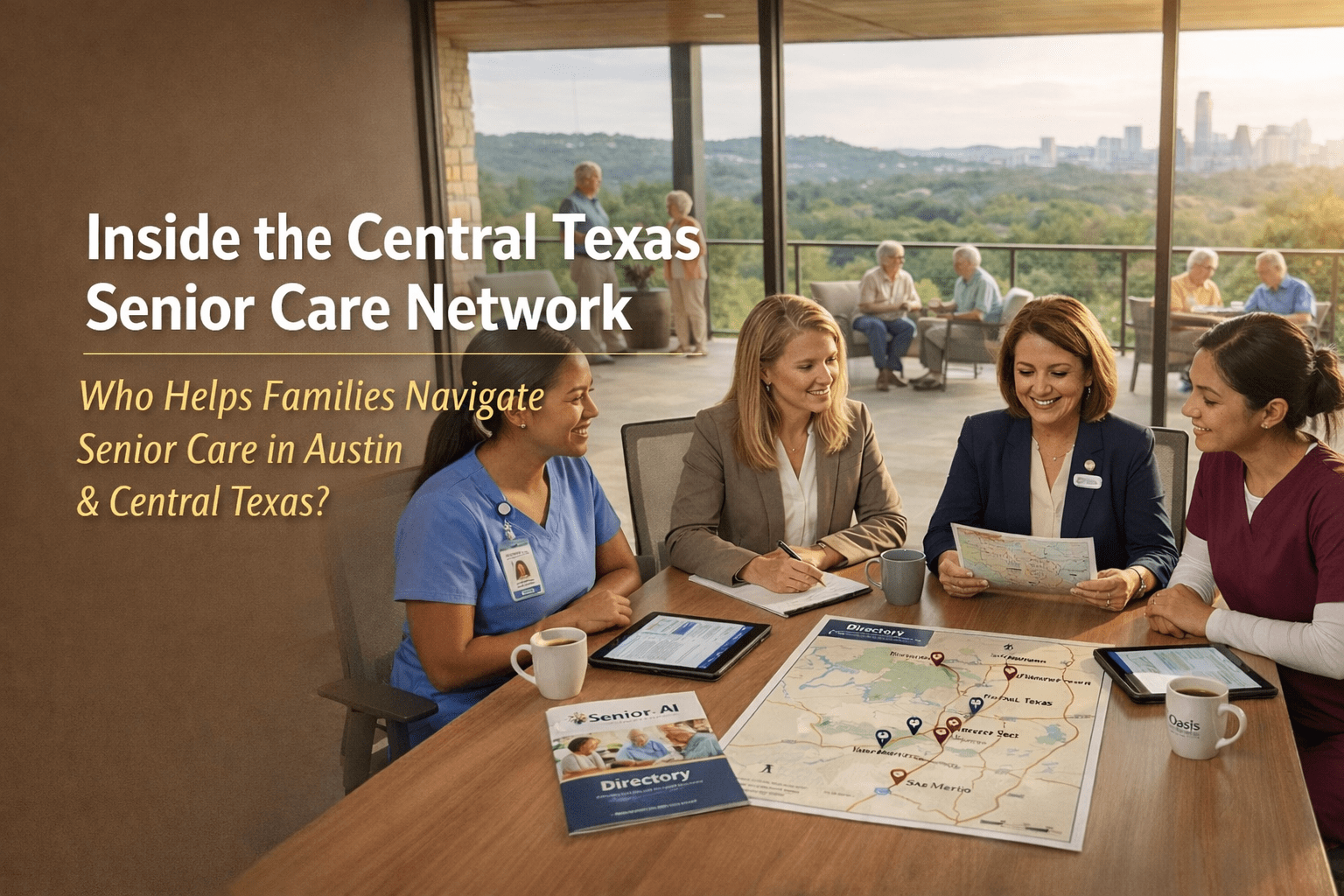
Who Helps Families Navigate Senior Care in Austin and Central Texas?
The Central Texas senior care network includes healthcare providers, legal professionals, community resources, and advisors who collaborate to help seniors and families navigate complex care decisions.
When a health crisis happens — a fall, hospitalization, dementia diagnosis, or gradual decline — most families assume senior care means one thing:
• Home care
• Assisted living
• Or a nursing home
But across Austin and Central Texas, senior care is rarely handled by just one provider.
Behind many successful outcomes is a network of professionals working together — many of whom families don’t realize exist until they suddenly need them.
Senior care is too complex — and often too expensive — to navigate alone.
That’s why collaboration matters.
The Professionals Families Often Don’t Realize They Need
When families begin navigating care decisions, they often encounter an entire ecosystem of professionals supporting seniors across Central Texas.
These professionals may include:
• Hospital discharge planners and case managers
• Home health nurses and therapy teams
• Non-medical home care agencies
• Hospice and palliative care providers
• Elder law attorneys and Medicaid planners
• Veterans benefits specialists
• Senior move managers and downsizing professionals
• Transportation providers and community resources
• Senior living advisors
Together, these professionals help families navigate:
• hospital discharges
• recovery after injury or illness
• aging safely at home
• long-term care planning
• housing and care transitions
Senior Industry Services helps connect many of these professionals across:
Austin • Round Rock • Georgetown • Cedar Park • San Marcos • New Braunfels • Waco • Temple • and surrounding Central Texas communities.
A Rapidly Growing Senior Population
The need for strong senior care collaboration is increasing every year.
According to the Texas Demographic Center and Texas Health and Human Services:
• Texans age 65+ are projected to grow from about 4.6 million today to more than 8.3 million by 2050
• The 85+ population is expected to nearly triple to about 1.5 million
In fast-growing areas like:
• Austin
• Williamson County
• Hays County
• Comal County
this means more families will need help navigating healthcare, housing, and long-term care decisions.
Communities across Central Texas are already seeing the impact.
For example:
• More than one quarter of Georgetown residents are age 65 or older, making it one of the most senior-dense communities in the region.
As the population ages, strong collaboration across the senior care network becomes even more important.
Why Senior Care Feels Overwhelming
Families often find themselves managing multiple issues at once:
• hospital discharge planning
• medication changes
• insurance questions
• safety concerns at home
• financial decisions
• caregiver burnout
• long-term care planning
Hospital discharge planners are often the first professionals helping families navigate these moments.
Their role is to help ensure seniors transition safely from hospital to the next level of care.
Why Collaboration Beats Algorithms
Many families begin their search for help online.
Technology and AI tools can organize information.
But they cannot:
• coordinate professionals
• attend care conferences
• walk hospital hallways
• sit with families during difficult conversations
Technology can point you in a direction.
Experience helps you make the right decision.
Research shows collaborative healthcare networks can reduce hospital readmissions by up to 20 percent, highlighting the importance of strong community partnerships.
Programs like Senior Industry Services Just Networking events across Central Texas help build the relationships that make this collaboration possible.
Central Texas Senior Care Resources Directory
Families often say the hardest part of senior care is simply knowing who to call first.
To make that easier, Senior Industry Services created Senior-AI, a searchable directory designed to help families and professionals locate trusted senior care resources across Central Texas.
Senior-AI helps people quickly find:
• Skilled Nursing Facilities (SNFs)
• Inpatient Rehabilitation Hospitals (IPRs)
• Hospitals and discharge teams
• Home health providers
• Non-medical home care agencies
• Hospice teams
• Elder law attorneys and Medicaid planning resources
• Veterans benefits assistance
• Transportation and community support services
Explore the Central Texas senior care directory:
Start Here If Your Family Needs Help Now
If you’re reading this because a parent or loved one is in a hospital, rehabilitation center, or facing a major care decision, you’re not alone.
Families across:
Austin • Round Rock • Georgetown • Cedar Park • San Marcos • New Braunfels • Waco • Temple
face these situations every day.
A good first step is simply starting with the right resources.
You can begin by exploring trusted services and professionals through the Central Texas senior care directory:
If your family needs guidance navigating senior living options such as assisted living, memory care, or residential care homes, experienced Oasis advisors can help you understand the next steps.
Senior care decisions are rarely made alone — and they shouldn’t be.
The Role of Senior Industry Services
Senior Industry Services connects the ecosystem.
Oasis Senior Advisors provides the human guidance.
Together we are working to make Central Texas the best place for seniors to age.
Sources and Data References
Information referenced in this article includes research from:
• Texas Demographic Center
• Texas Health and Human Services
• Texas 2036 Population Research
• U.S. Census Bureau
• Healthcare studies on collaborative care and hospital readmissions