
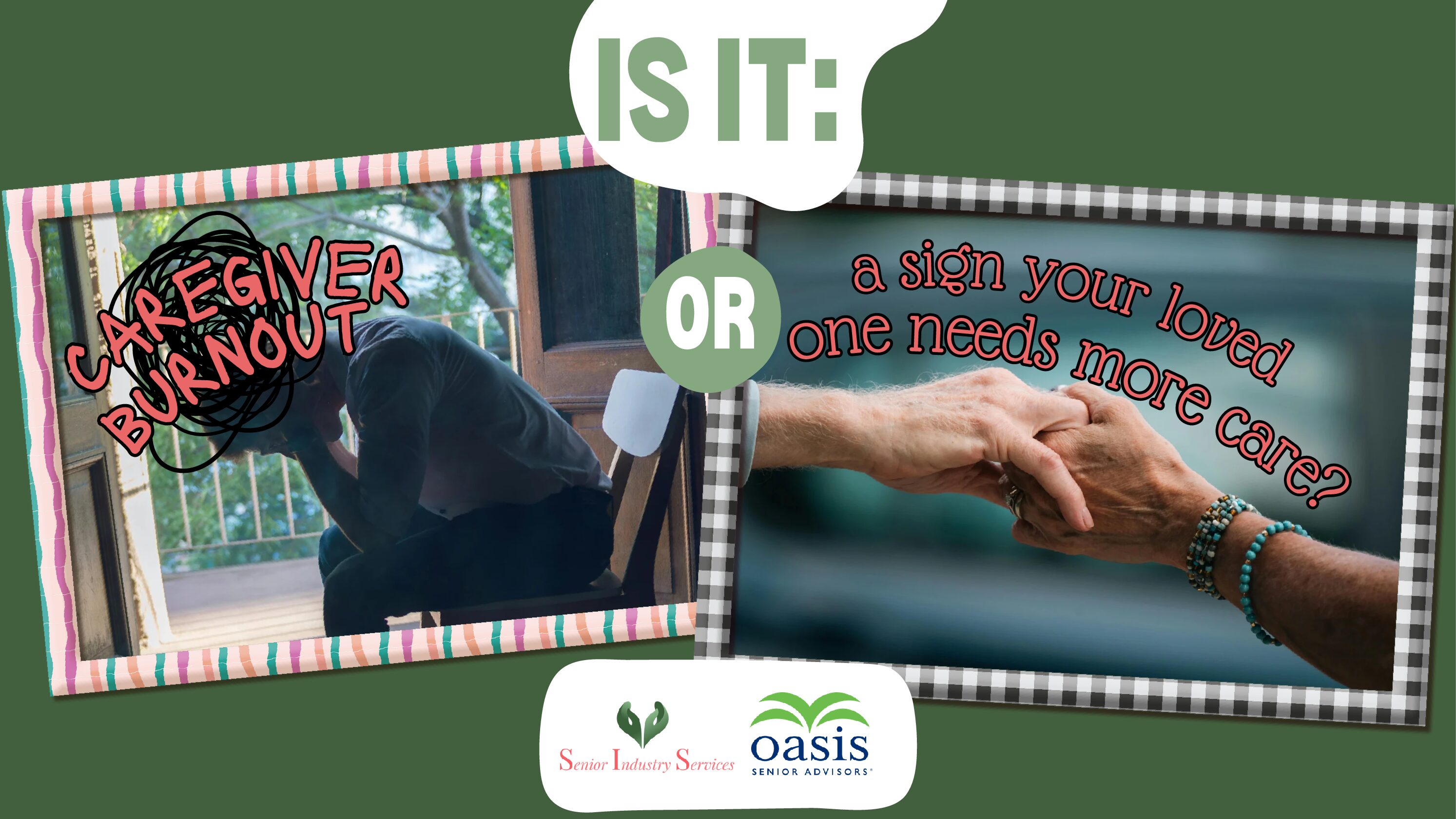
Here at Senior Industry Services, we talk about Caregiver Burnout a lot. We do this because we hope to bring more awareness to the subject and open up communication about it. We talk about it a lot because of the sheer amount we see in people whom we talk to and work with. We recognize the problems associated with, and because of, caregiver burnout and the difficult duty it can be to determine if and when your loved one needs more care.
A gentle reminder: Discussing your personal needs can be challenging for some people, but others may find it less so. Either way, being open and honest about your struggles and seeking help is never a sign of weakness but a sign of strength and bravery.
The Complicated Nature of Caregiver Burnout:
Caregiver burnout is often described in terms of the mental toll it takes on one, but not in the true clinical and serious nature that it is. Burnout for caregivers is not merely a problem of emotional management and exhaustion. Caregiving, specifically for a loved one, goes far beyond this and can be incredibly devastating on one’s mental and physical health.
Some signs and symptoms of Caregiver Burnout include:
- Physical/Emotional Exhaustion: Feeling tired even after rest, chronic headaches, or increased irritability.
- Withdrawal/Detachment: Losing interest in hobbies and pulling away from friends or family.
- Neglecting Your Own Health and Needs: Skipping meals, doctor appointments, getting sick more frequently, failing to get enough or proper sleep, and overall neglecting self-care.
- Hopelessness: Feeling overwhelmed, helpless, or resentful toward the person in your care.
Signs You’re at Risk of Caregiver Burnout:
While any caregiver can experience burnout, certain situations and scenarios can increase the likelihood. According to Compassionate Arms Home Care, you may be at higher risk if you:
- Provide daily care for a family member with significant physical or cognitive needs.
- Care for someone with dementia or Alzheimer's disease, where the emotional toll is compounded by the progressive nature of the illness and behavioral challenges.
- Work a full-time job in addition to your caregiving responsibilities, leaving little time for rest or personal care.
- Do not have a support network of family, friends, or community resources to share the caregiving load.
- Have been providing care for an extended period without breaks or relief, especially if the care needs have increased over time.
- Living with the person you are caring for can make it difficult to separate your caregiving role from the rest of your life.
- Managing your own health conditions while also providing care for someone else.
Burnout can (and often does) look like tiredness or exhaustion, but that’s only where the symptoms of burnout begin, not where they end. The clinical nature (and symptoms) of burnout often look more like chronic stress, decreased quality of sleep, a weakened immune system (more frequent illnesses), symptoms of depression, and overall elevated cortisol (the stress hormone) levels due to heightened stress.
There are many reasons why these symptoms of caregiver burnout arise, including the sheer emotional and physical toll one takes on when becoming a caregiver of a loved one. It’s a weighty task that nothing can truly prepare you for. Having to be a firsthand witness to your loved one’s cognitive and/or physical decline is challenging (and that’s putting it lightly). It’s an experience similar to living grief - grieving someone who is still alive, mourning the version of them that you know and remember, and having to come to terms with that version no longer existing. Having to navigate those complicated feelings on top of managing your roles and responsibilities as a caregiver can be debilitating.
When we see someone we love suffering from something with no way to help them get better, we feel helpless and hopeless. These complicated and often commingling emotions are understandable and acceptable. You shouldn’t feel guilty for feeling any feelings of anger, sadness, frustration, or anything else you might be feeling. It’s common to feel conflicting feelings, often simultaneously, whilst performing a task like caregiving.
There’s often little (if not no) time to process all of those emotions and the grief that coincides with caregiving. Because of this, you can often feel isolated in these experiences and lack the support that you need to help carry the heavy weight of being a caregiver. The combination of suppressed grief and sadness, along with the physical demand, is what makes burnout so difficult to recover from.
Because of this, respite care isn’t just a preference for those experiencing caregiver burnout; it’s what clinical evidence recommends.
“When provided consistently and in sufficient doses, respite is associated with positive outcomes for both patient and caregiver (e.g., reduced hospitalization, delayed institutionalization, reduced caregiver burden). Yet, 85% of caregivers do not utilize formal respite services, likely because of lengthy waitlists, inability to pay out-of-pocket, or a general lack of awareness of respite services or their potential benefit. Instead, family caregivers often prefer to use tag-teaming arrangements with friends, families, or neighbors whose occasional assistance provides informal respite to the primary caregiver.” - R.L. Utz (2022)
Respite Care & Signs Additional Care May Be Needed:
Caregiving can quickly become a thing that takes over one’s life. A family member can go into the role of being a part-time caregiver, and it can easily become a task that requires more time and effort than initially imagined. Things can change quickly when it comes to the level of care a caregiver must give because of how quickly the needs of a loved one can change and increase. Caregiving can quickly and easily become an all-consuming enterprise that engulfs caregivers’ daily life (Zarit et al., 2017).
Caregivers often articulate their need for extra help and support, requiring breaks from the continual demand of providing care. But sometimes, caregivers find it hard to ask for help and may feel ashamed for feeling overwhelmed by the sheer amount of duties they have. But we like to always remind caregivers that they should never feel ashamed of needing extra help. Having a strong support system is important for everyone, but especially those who work in roles as isolating as that of caregivers.
Some (more) gentle reminders:
- Needing help is okay!
- You don’t have to deal with this alone!
- It’s okay to ask for help!
When we talk about respite care, that is taking about an amalgamation of services specifically for caregivers to arrange extra help so they can have a break. Respite care gives caregivers the opportunity to take time away to deal with personal responsibilities they may have been neglecting and a chance to rest and focus on self-care. There are various options of respite care available to caregivers, including:
- In-home care
- Adult day care
- Overnight care
Determining if and when your loved one needs extra care can be challenging. Sometimes the physical and mental exhaustion can just be a sign of caregiver burnout, but it can also present as a sign that your loved one needs more care than you are able to effectively provide. This is not a mark of a personal failure, but rather a testament to the love you hold for your loved one and wanting them to have the best care available to them! While we all wish we had the time and ability to effectively care for our loved ones in times of need, that’s not always the case. Sometimes our jobs, family, or personal duties make it nearly impossible to perform all the duties necessary for being a caregiver.
Some signs that your loved one may require more care are:
- Overall escalating safety concerns (falls, bruises/injuries, wandering, balance or mobility issues)
- Complex medical conditions and needs
- Increasing cognitive decline
- Neglecting personal hygiene
- Forgetfulness or difficulty managing household tasks and/or medications
- Significant weight loss (shows signs of potential lack of nutrition and/or hydration)
- Emotional or behavioral changes (anxiety, depression, irritability)
The overall sign for more care needed is simply if your loved one’s needs continue to increase. Asking for help is not a sign of weakness; in fact, recognizing your own limits when it comes to caring for a loved one and seeking extra support is a beautiful act of love and responsibility. If your job as a caregiver has become riddled with stress and exhaustion, it may be a sign of burnout and a reminder to take care of yourself so you can effectively take care of someone else. It could also be a sign that your loved one needs additional care. The answer to either option is: support. The saying “it takes a village” applies to more than just parenthood and raising children; it fits every aspect of our lives. We were not meant to do life alone, and needing extra help and support is okay! To help get a better understanding of whether or not what you may be experiencing is a sign of burnout or a sign that your loved one needs more care, we recommend evaluating the signs we mentioned in the blog post and assessing your loved one's baseline health and behavior. Communicate openly with your loved one and ask about their concerns, needs, and preferences.
How Senior Industry Services Can Help:
If you think your loved one needs more care than you’re able to provide, that doesn’t mean you aren’t doing enough as a caregiver; it simply means your loved one needs more help! Caregiver burnout is due to high expectations and a lack of support, as well as the complicated emotions surrounding the role, whereas needing more care is indicated purely by the escalating needs of the care recipient. If your loved one needs more help, it doesn’t mean you’ve failed as a caregiver; it simply means you need more help from a trained professional, whether that’s through respite care or another type of senior care. We are here to help you figure that out!
At Senior Industry Services, we help you navigate the often confusing and daunting world of senior care with the help of resources available on our website and through Oasis Senior Advisors of Austin and Central Texas, which we are powered by and partner with. Explore our site for incredible tools, information, and access to trusted professionals in the senior industry. We aim to help you find the support you need and to make Central Texas the best place for seniors to age! Don’t hesitate to reach out with any questions; we are here to help you!
Written for Senior Industry Services by Lauren Hope Bartling
References:
10 signs of Caregiver Burnout (and how to address them). HomeCare Advocacy Network. (2026, January 29). https://hcan.com/aging-in-place/10-signs-of-caregiver-burnout-and-how-to-address-them/
Caregiver burnout: Signs you shouldn’t ignore. Elder Care Alliance. (n.d.). https://eldercarealliance.org/blog/caregiver-burnout-signs/#:~:text=You%20may%20forget%20appointments%2C%20misplace,if%20burnout%20signs%20feel%20familiar
Compassionate Arms. (2026, February 5). Caregiver burnout: Signs, prevention, and how respite care can help. https://compassionatearms.com/blog-caregiver-burnout-respite-care
Living, P. S. (2020, July 16). How to tell when your loved one needs care beyond your means. Presbyterian Senior Living. https://www.presbyterianseniorliving.org/blog/how-to-tell-when-loved-one-needs-care
Markland, J. (2023, June 9). 10 signs your loved one needs additional caregiving support. 2nd Family. https://2ndfamily.com/10-signs-your-loved-one-needs-additional-caregiving-support/
Utz R. L. (2022). Caregiver Respite: An Essential Component of Home- and Community-Based Long-Term Care. Journal of the American Medical Directors Association, 23(2), 320–321. https://doi.org/10.1016/j.jamda.2021.12.020
Yuuchi (Relative-Coach-501). (2026, March 23). Do caregivers know that caregiver burnout is actually a clinical condition and not just tiredness?. Online Discussion Forum on Aging. https://www.reddit.com/r/Aging/comments/1s1gkpg/do_caregivers_know_that_caregiver_burnout_is/
Zarit, S. H., Bangerter, L. R., Liu, Y., & Rovine, M. J. (2017). Exploring the benefits of respite services to family caregivers: methodological issues and current findings. Aging & mental health, 21(3), 224–231. https://doi.org/10.1080/13607863.2015.1128881