
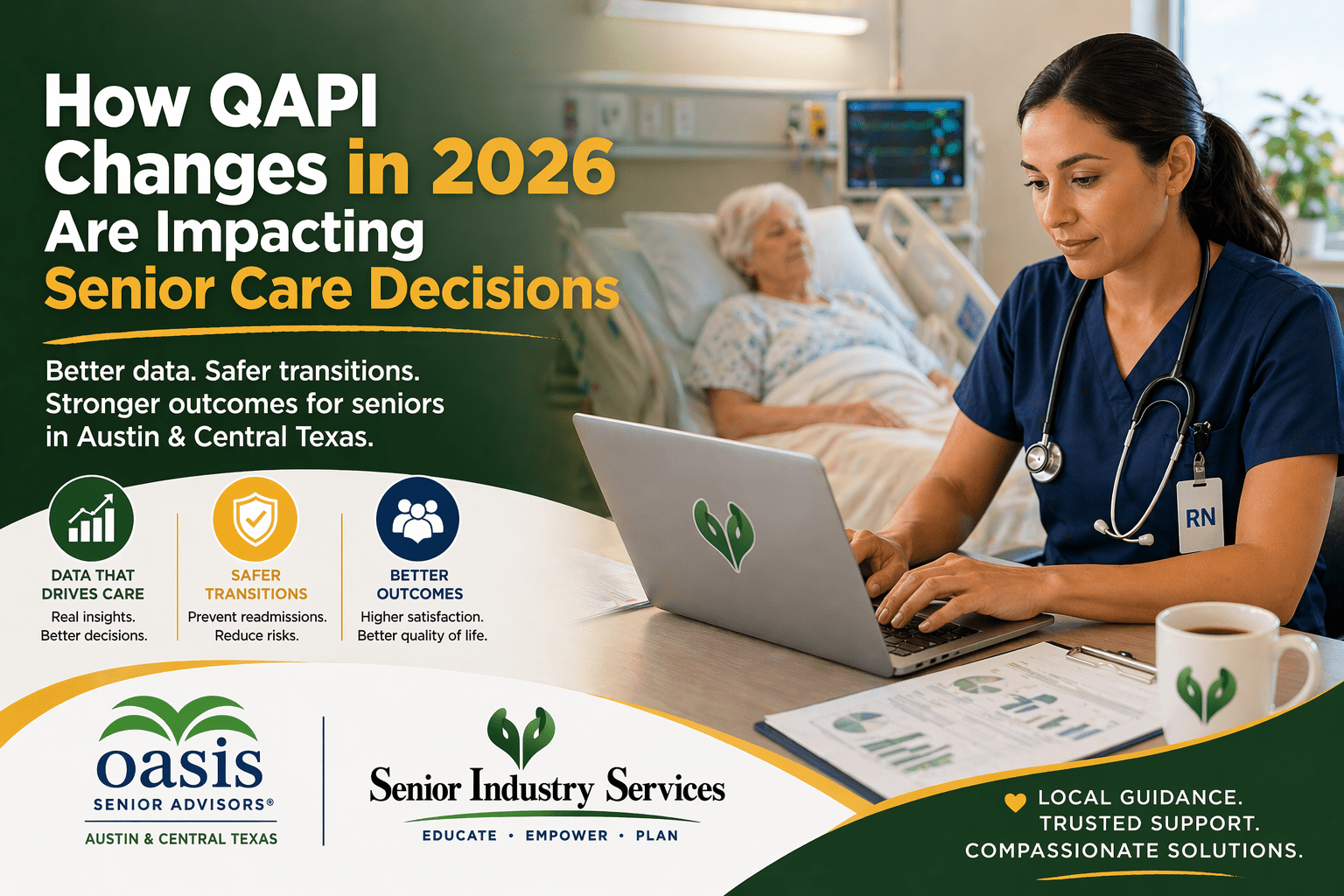
As healthcare continues to evolve, one thing is becoming increasingly clear: what happens after a hospital discharge is now just as important as the care delivered inside the hospital. With new expectations from the Centers for Medicare & Medicaid Services (CMS) rolling into 2026, Quality Assurance and Performance Improvement (QAPI) is no longer just a regulatory requirement—it’s a defining factor in how well organizations support safe transitions, prevent readmissions, and deliver consistent outcomes for seniors.
CMS has been steadily tying reimbursement to outcomes through programs like the Hospital Readmissions Reduction Program. In simple terms, the question is no longer “Was the discharge completed?”—it’s “Did the plan actually work in real life?”
That shift matters because the risks after discharge are real and measurable. Nationally, medication-related harm affects more than 1.3 million Americans each year, with many errors occurring outside the hospital setting. At the same time, avoidable readmissions are often tied not just to medical conditions, but to breakdowns in coordination, communication, and support after discharge.
For families in Austin, Round Rock, Georgetown, Kyle, and across Central Texas, this creates a challenging reality. Decisions about assisted living, memory care, rehab, or returning home are often made quickly—sometimes within days—without full visibility into what will actually be sustainable. On paper, multiple options may look similar. But behind the scenes, the strength of a community’s systems, leadership involvement, and care coordination can vary significantly.
We’re already seeing where breakdowns happen most often. A senior may leave the hospital or rehab with a solid plan, but limited caregiver support, unclear expectations, or delays in securing the right next step can quickly lead to complications. Falls, medication issues, and rapid declines frequently occur within the first 24 to 72 hours—driving preventable readmissions and added stress for families. These are not always clinical failures; more often, they are gaps in planning and execution.
This is exactly what CMS is pushing providers to address in 2026. High-performing organizations are moving beyond reactive care. They are using data to identify patterns, prevent repeat issues, and ensure that patients are aligned with the right level of care the first time. That includes understanding caregiver limitations, anticipating next steps after rehab, and building a discharge plan that holds up outside of a clinical setting.
At Oasis Senior Advisors Austin and Central Texas, our role is to support that process—not replace it. We work alongside hospitals, discharge planners, and families to help ensure that each transition is realistic, coordinated, and sustainable. Because of our deep involvement across assisted living, memory care, care homes, skilled nursing, and independent living throughout Central Texas, we’re able to identify patterns, understand community performance trends, and guide families toward options that align with both clinical needs and long-term goals.
Through our collaboration with Senior Industry Services (SIS), families and professionals also gain access to a broader network of resources—ranging from financial guidance like VA benefits and long-term care insurance to tools that support safer transitions at home or in a community setting. The goal is simple: reduce confusion, improve coordination, and create a clearer path forward during what is often a stressful and time-sensitive decision.
As CMS continues to push the industry toward more transparent, data-driven care, families need more than a list of options—they need insight into which paths are most likely to succeed. QAPI may sound like a regulatory framework, but its real-world impact shows up in everyday outcomes: fewer readmissions, safer transitions, and better quality of life for seniors.
If you’re navigating a hospital discharge in Austin, Lakeway, Georgetown, Waco, Bastrop, New Braunfels, or anywhere across Central Texas, the next 24–72 hours matter. The right decision early can prevent setbacks, delays, and readmissions.
Don’t wait until the plan starts to break down—get clarity before discharge or immediately after.
📞 Call or text 512-800-1469
🌐 Refer a patient: https://www.oasissenioradvisors.com/referrals/?slug=austin-central-tx
John Brown, CSA
Owner & CEO
Oasis Senior Advisors Austin and Central Texas
& Senior Industry Services
📞 Oasis: 512-800-1469
📞 SIS: 512-827-1292
🌐 https://www.oasissenioradvisors.com/locations/austin-central-tx/
🌐 https://seniorindustryservices.com/
Compassionate Care Options for Seniors in Central Texas
One Call. Many Solutions.
You are not alone.