
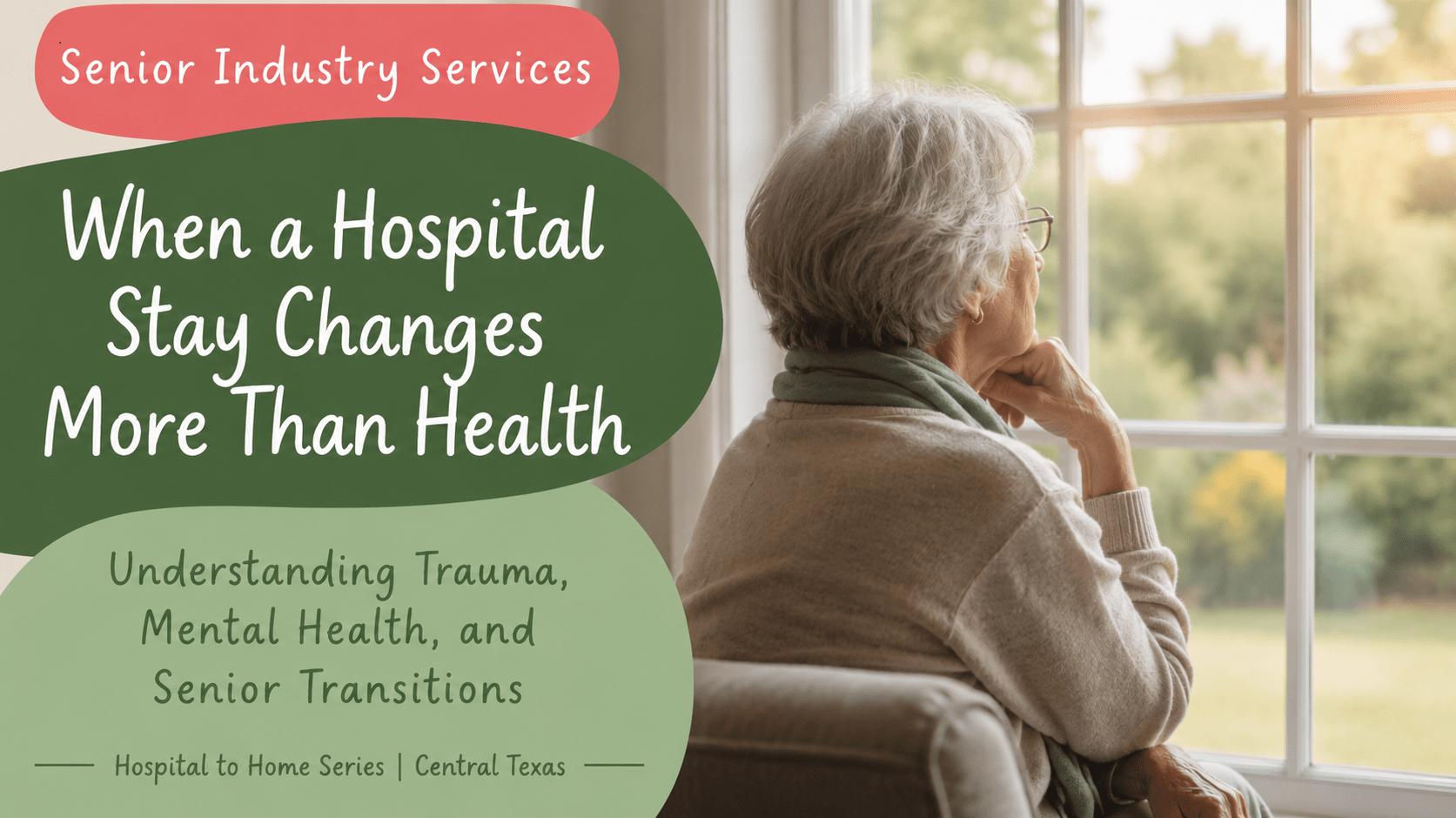
In recognition of Mental Health Awareness Month
“He was fine… until the hospital.”
A family called after their father was discharged from the hospital.
Before the fall, he was quiet but stable.
After discharge, everything changed.
He became withdrawn. Easily agitated. Occasionally angry.
The family assumed it was confusion… or maybe early dementia.
But when someone asked about his past, everything shifted.
He had served in combat decades earlier—and had never talked about it.
What looked like behavior changes after hospitalization in seniors was something deeper:
Long-standing, unaddressed Post-Traumatic Stress Disorder resurfacing during a vulnerable moment.
Mental Health in Seniors: More Common Than Many Realize
Mental Health Awareness Month reminds us that mental health challenges don’t disappear with age—they often become more complex.
According to the World Health Organization:
- 14.1% of adults age 70+ live with a mental disorder
In the U.S.:
- About 1 in 5 older adults experience mental health concerns (Substance Abuse and Mental Health Services Administration)
And importantly:
From FAIR Health:
- Mental health diagnoses in adults 65+ increased 57.4% from 2019–2023
This trend is accelerating, not isolated.
The Hospital-to-Home Reality No One Talks About
For many families searching things like:
- “mental health after hospital stay elderly”
- “why is my parent different after hospitalization?”
The answer isn’t always medical—it’s often emotional.
A hospital stay can trigger emotional and behavioral changes after hospitalization in seniors that are frequently mistaken for dementia or normal aging.
These events often include:
- Sudden loss of independence
- Disrupted routines and sleep
- High-stress decision-making
- Rapid discharge transitions
In the Austin and Central Texas area, we frequently see families struggle with these exact post-hospital transitions.
Why Health Events Can Trigger Long-Forgotten Trauma
For many older adults, a hospital stay doesn’t create new problems—it reveals old ones.
Here’s why:
Loss of control
Dependence on others can mirror past experiences of powerlessness.
Unfamiliar environments
Hospitals and care settings can feel chaotic and unpredictable.
Cognitive vulnerability
Conditions like Dementia reduce emotional filtering, allowing past memories to resurface.
Emotional overload
Pain, medications, and stress lower resilience.
Another Story: The Hidden Layer
An 88-year-old woman moved into care after a fall.
She began refusing care after hospitalization, became agitated, and resisted assistance.
At first, it was labeled “difficult behavior.”
But her daughter later shared:
She had lived in an abusive marriage for years.
Suddenly, everything made sense.
The care wasn’t the issue—
It was what the care triggered.
Signs It May Be More Than “Adjustment”
Families often search:
“why is my elderly parent aggressive after hospital?”
“senior refusing care after hospital stay”
Here are key signs it may be more than a normal transition:
- Sudden personality changes after hospitalization
- Refusing care, bathing, or assistance
- Increased agitation or aggression
- Withdrawal or loss of engagement
- Fearfulness or hypervigilance
- Sleep disruption or nightmares
These may indicate trauma responses, not just “adjustment.”
When It’s Misunderstood
After discharge, families often hear:
- “He’s just not adjusting”
- “She’s confused”
- “This is part of aging”
But in many cases, these are:
- Trauma responses
- Fear-based behaviors
- Long-standing anxiety or depression
The Treatment Gap
Despite clear need:
- Less than 40–50% of older adults receive mental health treatment
- Many cases go unrecognized or misdiagnosed
Barriers include:
- Stigma
- Limited access to geriatric specialists
- Under-recognition of symptoms
Suicide Risk in Older Adults
Older adults—especially men over 75—have some of the highest suicide rates.
This highlights the importance of recognizing:
- Emotional distress
- Behavioral changes
- Untreated depression
A Better Way to Understand What’s Happening
Most families call us at the exact moment things stop making sense—
when behavior changes don’t match what they were told to expect.
After a hospital stay, the question shouldn’t just be:
~ “What level of care do they need?”
It should also be:
~ “What have they experienced—and how might this moment be affecting them emotionally?”
Because sometimes:
- It’s not just the move
- It’s what the move brings back
Why This Matters for Families and Professionals
Mental health is often the hidden factor behind:
- Failed discharges
- Hospital readmissions
- Struggles at home or in care settings
For discharge planners and healthcare providers, recognizing these patterns early can help prevent avoidable readmissions and improve outcomes.
Final Thought
Mental Health Awareness Month is a reminder:
Aging is not just physical.
It’s emotional.
It’s shaped by a lifetime of experiences.
And sometimes, a hospital stay doesn’t just change the present—
It brings the past back into focus.
Navigating a Hospital-to-Home Transition?
If you’re seeing behavior changes after hospitalization or struggling with next steps, you’re not alone.
Oasis Senior Advisors Austin & Central Texas helps families understand both:
- The level of care needed
- And the environment that will feel safe
Sources & Data References
- World Health Organization – Mental Health of Older Adults
- Substance Abuse and Mental Health Services Administration – NSDUH Data
- FAIR Health – Mental Health Claims Data Report
- Centers for Disease Control and Prevention – Suicide Data
- National Institute of Mental Health – Older Adult Mental Health
- National Council on Aging – Mental Health Resources
John Brown, CSA
Owner, Oasis Senior Advisors Austin & Central Texas
Founder, Senior Industry Services
📞 512-800-1469
🌐 https://www.oasissenioradvisors.com/locations/austin-central-tx/
🌐 https://seniorindustryservices.com/
One Call. Many Solutions.
Compassionate guidance for senior living and care across Central Texas.