
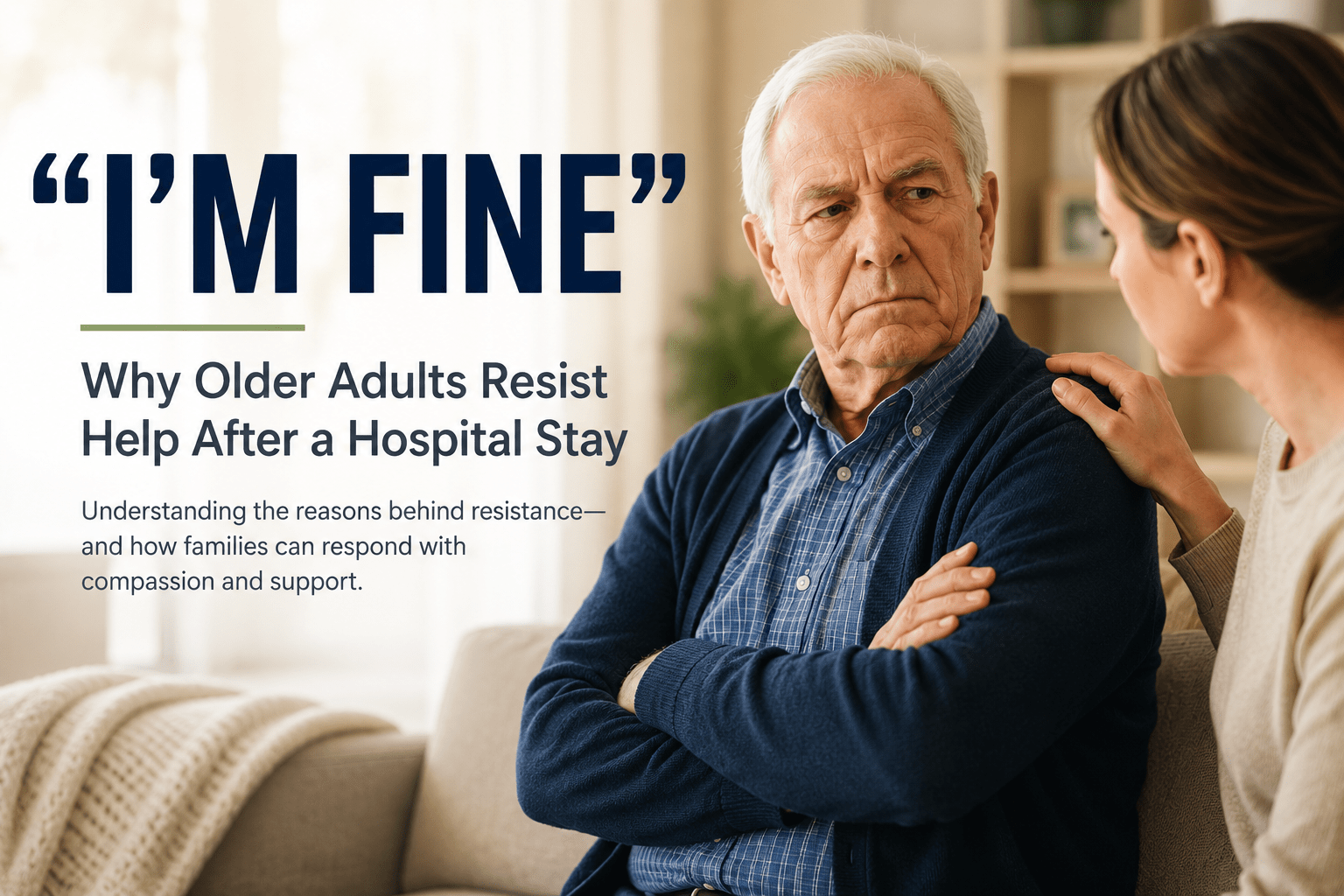
A hospital stay can change everything.
One fall. One infection. One medication mistake. One rehab recommendation. Suddenly, families across Central Texas are having conversations they never expected to have:
- “Mom can’t be home alone anymore.”
- “Dad refuses to use his walker.”
- “She won’t let anyone help her bathe.”
- “He says he’s fine, but we know he isn’t.”
For many families, the hardest part is not finding care.
It is helping a loved one accept it.
The truth is, resisting care is rarely about stubbornness. More often, it is about fear, control, identity, and the overwhelming reality that life is changing.
At Senior Industry Services (SIS) and Oasis Senior Advisors Austin & Central Texas, we regularly speak with families from Austin, Round Rock, Georgetown, Kyle, Buda, San Marcos, Temple, Waco, New Braunfels, Marble Falls, Bryan/College Station, and surrounding Central Texas communities who are trying to navigate this exact situation.
Why Seniors Resist Care
Many older adults see accepting help as losing independence.
To families, home care, rehab, assisted living, or memory care may feel like support and safety. To a senior, it can feel like:
- Losing control
- Becoming dependent
- Being treated differently
- Leaving home forever
- Becoming a burden
- Losing privacy or dignity
For some older adults, saying “I’m fine” becomes a way to hold onto identity and autonomy during a season filled with uncertainty.
This is especially common after:
- hospitalization
- falls
- strokes
- dementia progression
- medication changes
- rehab stays
- loss of a spouse
- repeated ER visits
The emotional side of aging is often overlooked during discharge planning, but families feel it immediately once they return home.
Research consistently shows that resistance to care is often connected to fear of losing independence, changes in identity, anxiety, mistrust, depression, or cognitive decline rather than simple stubbornness.
Sometimes They Truly Don’t Believe Anything Is Wrong
In dementia and Alzheimer’s disease, resistance to care can be neurological.
A condition called anosognosia prevents some individuals from recognizing their own impairments. This is not denial or manipulation. The brain literally struggles to process the decline.
Research suggests that up to 60% of individuals living with dementia may experience anosognosia, affecting their ability to recognize memory loss, safety concerns, or functional decline. Concepts surrounding anosognosia and dementia-related resistance are widely discussed in neurology and dementia care research and supported through educational guidance from sources like WebMD.
That is why families often hear:
- “I already took my medicine.”
- “I don’t need help.”
- “You’re overreacting.”
- “I can still drive.”
- “Nothing happened.”
Even when the risks are obvious to everyone else.
This creates enormous stress for spouses and adult children trying to keep someone safe without damaging the relationship.
Common Situations Families Face
Across Central Texas, families frequently contact us because a loved one is:
- Refusing rehab after a hospital stay
- Refusing home health or caregivers
- Refusing assisted living tours
- Refusing memory care
- Refusing to stop driving
- Refusing doctor appointments
- Refusing help with bathing or hygiene
- Living alone in unsafe conditions
- Returning to the ER repeatedly
- Saying they want to go home even when home is no longer safe
One daughter in Georgetown recently told us:
“The hospital said he was medically stable, but emotionally he was terrified. Every conversation about help turned into an argument.”
That situation is more common than many families realize.
One of the most difficult moments for families is when a discharge plan looks safe on paper but falls apart emotionally once everyone gets home.
Hospitals move quickly. Families process slowly.
That gap is where many readmissions, caregiver crises, and emergency decisions begin.
The Hidden Risks of Refusing Care
Sometimes families wait too long because they hope things will improve.
Unfortunately, delaying support can increase risks such as:
- falls
- medication mistakes
- wandering
- dehydration
- caregiver burnout
- poor nutrition
- isolation
- repeated hospitalizations
Research from organizations such as the National Adult Protective Services Association (NAPSA) highlights that nearly 1 in 5 older adults may experience self-neglect or risk factors associated with it, including unsafe living conditions, poor hygiene, medication mismanagement, or lack of proper nutrition.
We also see many adult children quietly taking on unsafe caregiving responsibilities because their parent refuses outside help.
Over time, the caregiver’s health, work, marriage, and emotional well-being often begin suffering too.
Research on senior self-neglect and refusal of support highlights increased risks for falls, medication mismanagement, hospital readmissions, caregiver burnout, and unsafe living situations.
What Actually Helps When a Senior Resists Care?
1. Stop Arguing Facts
Logic rarely wins emotional battles.
Saying:
- “You can’t live alone.”
- “You almost fell.”
- “The doctor said you need help.”
often increases resistance.
Instead, validation and redirection work better:
- “I understand why this feels uncomfortable.”
- “Let’s just try this temporarily.”
- “We want to make things easier, not take away control.”
The more pressure seniors feel, the harder they may push back.
2. Start Small
Care does not have to begin with major life changes.
Sometimes the best first step is:
- meal delivery
- housekeeping
- transportation help
- companionship visits
- medication reminders
- short-term rehab
- respite care
Small support often builds trust over time.
3. Give Them Choices
People resist losing control.
Whenever possible, offer choices:
- morning or afternoon visits
- male or female caregiver
- which community to tour
- which child attends appointments
Maintaining dignity matters.
4. Reframe Care as Independence
One of the most effective approaches is reframing support as a tool for staying independent longer.
For example:
- home care may help someone remain safely at home
- assisted living may reduce falls and isolation
- memory care may provide structure and supervision
- rehab may prevent another hospitalization
Care is not always about “giving up.”
Sometimes it is what preserves quality of life.
5. Bring in a Neutral Third Party
Many seniors respond differently to professionals than family members.
Doctors, discharge planners, therapists, senior advisors, social workers, clergy, or trusted peers can often reduce emotional tension and help guide productive conversations.
That is one reason many families contact Oasis Senior Advisors during hospital-to-home transitions.
Sometimes they do not need someone to “convince” their loved one.
They need someone who understands the emotional side of aging and can help everyone slow down, process options, and create a realistic plan.
When It Becomes a Safety Issue
There are situations where resistance becomes dangerous.
Examples include:
- repeated falls
- wandering
- medication mismanagement
- severe self-neglect
- unsafe driving
- advanced cognitive decline
- caregiver exhaustion
- refusal of medically necessary care
At that point, families may need to discuss:
- Power of Attorney
- medical decision-making
- guardianship
- memory care support
- skilled nursing options
- long-term planning
These are never easy conversations.
But avoiding them can sometimes lead to larger crises later.
Families Across Central Texas Are Not Alone
From Austin to Waco, Georgetown to New Braunfels, and Marble Falls to Bryan/College Station, families face these conversations every day.
If your loved one is resisting care after a hospital stay, refusing assisted living, struggling with memory loss, or returning home to an unsafe situation, know this:
You are not failing.
And your loved one is not simply being “difficult.”
Very often, they are trying to hold onto control in a world that suddenly feels unfamiliar.
That is where compassionate guidance, education, patience, and support can make all the difference.
Need Help Navigating Senior Care Options in Central Texas?
Oasis Senior Advisors Austin & Central Texas helps families explore:
- Assisted Living
- Memory Care
- Care Homes
- Independent Living
- Skilled Nursing
- Hospital-to-Home transitions
- Veterans Aid & Attendance resources
- Long-Term Care planning
Families can also explore educational resources, professional networking, and senior support tools through Senior Industry Services (SIS).
One call can help families better understand what options may exist before a crisis becomes even larger.
Sources & References
This article was informed by research and educational guidance from:
- AgingCare
- Northwestern Medicine
- WebMD
- Arosa Care
- Hopebridge
- Today’s Geriatric Medicine
- National Adult Protective Services Association (NAPSA)
Research themes and framework notes used in development of this article included the psychological and emotional causes of seniors resisting care, including fear of losing independence, cognitive decline, anosognosia, caregiver dynamics, and post-hospital transition risks.
John Brown, CSA
Owner & CEO
Oasis Senior Advisors Austin & Central Texas
Senior Industry Services (SIS)
Helping families across Austin, Round Rock, Georgetown, Kyle, Buda, San Marcos, New Braunfels, Temple, Waco, Marble Falls, Bryan/College Station, and throughout Central Texas navigate senior living, hospital-to-home transitions, memory care, long-term care planning, and caregiver support with compassionate guidance.