
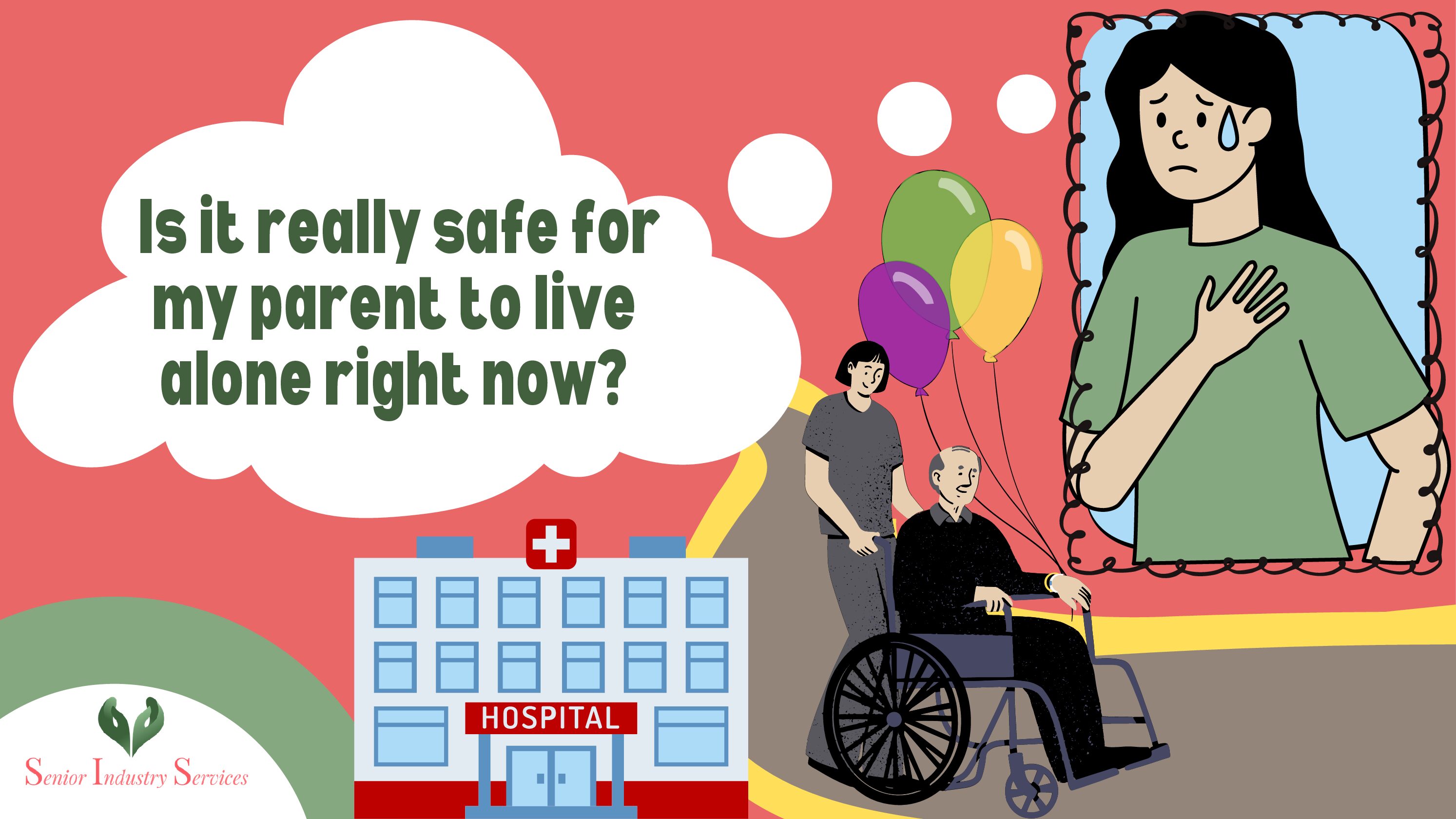
A hospital discharge can bring relief, but it also raises an important question for many families and caregivers. After a loved one is hospitalized (for whatever cause, be it a fall, an illness, or a surgery), the discharge process can be stressful, as we’ve discussed in earlier blog posts, but it’s a positive step forward for your loved one's healing. All that happens after discharge can feel like a mystery, and you may feel unsure of the right thing to do.
The National Institute of Health reports that 13.2 million people aged 65 and over are hospitalized each year for medical conditions, surgeries and injuries. So, while hospitalizations aren’t uncommon, that doesn’t make navigating the process afterward any easier. In fact, making decisions afterward can feel so daunting as so much responsibility for your loved ones health and safety now land on your shoulders.
Your loved one might even have specific requests or wishes that they aren’t quite ready to do yet. For example, a lot of seniors simply (and understandably) want to go home after a hospitalization. They want to be back in familiar scenery with their familiar routine. However, that might not always be the best option for them following a hospital stay. They might require extra assistance or rehabilitation to help them bounce back. It can be hard to make those important health decisions for your loved one and know what the right thing to do is. You want your loved one to feel comfortable, but you also want them to be safe. It can be hard to determine definitively if your loved one is stable and strong enough to return home and live independently; that’s why in today’s blog post we’ll go over some signs to ensure your loved one is capable of continuing to live alone and how you can check and ensure their home meets safety standards and expectations for a senior.
"Is it really safe for my parent to live alone right now?"
At Senior Industry Services, this is one of the most common concerns we hear from adult children and caregivers. We understand, appreciate, and share the concern for seniors, especially when they are in a more vulnerable state following a hospital stay. It can be challenging to make the proper conclusion, especially regarding their physical well-being, and we understand you don’t want to make any mistakes and risk a re-hospitalization. It’s hard for us to say definitively what the best path is for you and your loved one, as every senior and every medical case is unique, so recovery after a hospital stay can be very unpredictable. Two cases, even with the same age and diagnosis, can look entirely different. And seniors who may have previously been independent and lived without the need for extra assistance may now struggle with things like balance and mobility, even if only temporarily. They may also have trouble managing their medications and following daily routines.
According to a study on the Problems of Older Adults Living Alone After Hospitalization, older adults may undergo substantial changes in function and living status when hospitalized for acute medical illness. A decline in function in activities of daily living (ADLs) occurs in one third of hospitalized older adults and frequently heralds an end to community living. The study further goes on to state that for many patients, the posthospitalization period is one of dynamic flux. Changes in functional status (both improvement and worsening) commonly occur even after hospitalization, and the risk of nursing home placement may persist. This is what makes it so hard to determine the right thing to do and why having guidance can be so helpful in making these tough decisions.
Staying in the hospital, especially if it was for more than a few days, can result in your becoming reliant on professionals who are there to answer questions and provide care as quickly as possible. Now, with your senior loved one at home and that care not readily available, the responsibility falls on you. This is such an overwhelming responsibility, but you don’t have to do it alone! Here at Senior Industry Services, we are here to help you in any way we can! Our website is equipped with information directly from experts of the senior industry in the central Texas region. Senior Industry Services (SIS) serves as a resource hub to help families understand the landscape of senior care with thoughtful insights and explanations. With blog posts, tools, and practical information, we aim to help you move from panic to informed decision-making. Our goal is and has always been to make Central Texas the best place for seniors to age!
Today, we’ve compiled a comprehensive safety review that you can cover to ensure you make the best decision for you and your loved one! Ensuring your loved one has a safe space to go home to is the first step!
Why the First Few Weeks Matter Most
The period immediately after a hospitalization is often the highest-risk time for seniors. Weakness, fatigue, confusion, medication changes, and fall risk are all more common during recovery. We have a blog post going further into depth on this topic and exactly why the first phase of recovery at home is the most important, namely the first 72 hours. If you’d like to read more about that, you can here: https://seniorindustryservices.com/2026/04/10/the-72-hours-after-a-hospital-discharge-what-caregivers-arent-told/
Because the first 72 hours are so delicate, it is typically recommended that someone stay with the senior just to monitor their condition — for their peace of mind and yours as a loved one!
After a hospitalization, a senior may appear fine and healing according to plan on the outside, especially if you’re only around them for a short visit; however, there are still plenty of challenges they may be facing. Some of those include safety using the bathroom, preparing meals, remembering to take their medications, walking and transferring without assistance, and using stairs (if their home isn’t a single story). That’s why you have to take more into consideration when your senior wants to return after a hospital stay than just their desire to be at home. You have to evaluate the safety of their environment and their ability level to safely maneuver around their home and conduct their activities of daily living. To help aid in this evaluation, we’ll go over some tips to ensure your loved one's home is safe for them to return to.
Post-Hospital Safety Checklist for Seniors Living Alone
This checklist is a starting point for you as a family member or caregiver to work from and help determine your senior's needs and the safety of their environment. Following a hospitalization, most people just want to go home and sleep in their own bed and be surrounded by the familiar comforts of home. However, that might not always be the safest or most ideal option, especially depending on the seniors' needs and current ability levels. Being home alone without assistance may be hazardous and not only postpone their healing but could also lead to re-hospitalization. Some seniors may need to continue physical therapy or need help going to and from doctor's appointments, which can be challenging if you (as a family member) work full time and already have a busy life. Seniors may also require extra medical equipment following certain procedures while in the hospital, such as a stairlift or an accessible bathtub, which their home may not be equipped with or their budget cannot accommodate. Making these alterations to a space may not be realistic or needed, especially if they won’t be needed long-term, but should still be something you keep in mind! The goal is to make their healing journey as easy as possible and reduce challenges that they might face. Sometimes, instead of attempting to recover at home, the better (safer and sometimes more cost-effective) option might be staying at a skilled nursing facility short-term, or looking into a temporary caregiver, or respite care to help you manage the more intense workload of being a family caregiver following a hospital stay.
Here is a comprehensive list of questions and considerations to make about your senior and their home to determine if they are capable and safe enough to return home independently:
1. Mobility & Walking Safety
- Can they get out of bed or a chair without help?
- Are they steady while walking?
- Are there any tripping hazards such as rugs, electrical cords, or clutter?
- Do they use a walker or cane? Can they use it properly, or do they require assistance?
- Are there stairs they need to use? Can they safely navigate stairs?
Going over these questions will help you to determine both the safety of their environment and their ability to navigate it. It can also help point out any changes you can make (such as removing rugs or reducing clutter) to better ensure their safety. Some warning signs that they may be having issues with mobility, transferring, or walking around safely include needing to grab and hold onto furniture while walking, shortness of breath after minimal movement, dizziness or weakness, and trouble getting to the bathroom when needed. If there are signs of struggle with any of these, or if you find yourself with more doubts and uncertainty after asking those questions, additional support may be necessary, even if only temporarily.
2. Fall Risk Inside the Home
Like we mentioned above, tripping hazards are a big thing to look out for in seniors' homes, but even more so after a stay in the hospital. Falls are one of the leading causes of rehospitalization for older adults, and the risk can easily be reduced by checking walking paths and clearing clutter from them, ensuring there is adequate lighting, and making sure there are no loose or curled rugs. Falls can happen anywhere, even over the smallest of crevices or obstacles, but one of the most dangerous places for a fall is in the bathroom or stairs. To help reduce fall risk in bathrooms, there should be grab bars installed by the toilet and in the shower/tub region. Any stairs should also be equipped with proper railings, although we suggest seniors avoid using stairs unaccompanied following a hospital stay. Other helpful tools to reduce falls include shower chairs, bedside toilets, non-slip mats and slippers/socks, night lights, and medical alert systems in case of a fall or emergency.
3. Medication Management
Hospital stays often result in medication changes, and confusion about prescriptions is extremely common after discharge. It can be hard for seniors to remember to take all of their medicine in the proper amount and at the proper time. It’s important to establish their understanding of the medications they are taking and how much, how often, and when they are meant to take them. You can help them complete this task independently by ensuring medication labels are easy to read and caps are easy to open (if not split or organized into a pill box). You can also help by setting alarms or reminders for when they need to take their medicine. You want to ensure they can safely take their medicine when needed to reduce the risk of side effects, missed doses, or double doses.
4. Nutrition & Hydration
Recovery requires proper nutrition, but many seniors struggle with meal preparation after a hospital stay. Seniors also notably struggle with drinking enough water, which often results in bladder infections, and could end up hospitalized. To reduce this, you should ask yourself:
- Can they safely cook?
- Are there enough groceries available? Is their pantry stocked?
- Are they drinking enough water?
- Have they lost weight recently?
If they already have a history of not maintaining proper nutrition and hydration, it would be a good idea to look into extra assistance for them, whether that be skilled nursing, an in-home caregiver, respite care, or a friend/family member to help them transition back home. Some signs they may need additional help might be a history of skipped meals or bladder infections, dehydration, or spoiled/expired food in their fridge or pantry. Another option to ensure they are eating healthy meals often might be meal delivery services to help aid them while they continue to rest and recover.
5. Ability to Handle Daily Activities
The ability to effectively complete Activities of Daily Living (ADLs) is an important factor for determining a senior's ability to continue living independently. How well a senior is able to effectively perform an ADL will help you to determine whether or not they’re able to return home independently after a hospitalization. ADLs consist of daily essential tasks, including: Using the restroom, bathing, getting dressed, transportation (driving), paying bills, and managing medical appointments. While one person may be able to perform some of these independently, they might need temporary help with others.
It’s important, also, to consider your (and their) preparedness in case of an emergency. Do they have a phone they can use to call if they need assistance? Will they have someone checking up on them regularly? Those are questions you can ask and consider when making the decision of whether or not they can return home alone.
Overall, it’s important to determine your senior loved ones' needs, their abilities, and the safety of their environment. Some changes may need to be made following their hospital stay, but they should not be permanent. Extra support may be needed, and we hope that if that is the case, you don’t fear where to turn, because you have us! Here at Senior Industry Services, we aim to be the starting point for families of seniors, caregivers, and other professionals working in the senior industry. We provide an educational, searchable, and vast network of resources and information from experts in the senior industry. We are here to help and support you in any way we can, so please don’t hesitate to reach out with questions!
Every recovery situation is different. Some seniors may return home safely with minimal support, while others need temporary or ongoing assistance to remain safe and independent. The key is to evaluate your specific situation honestly, not just hopefully. While hope is important, it is not a measuring factor in many cases, including ones like these. If you’re unsure whether your parent can safely live alone after a hospital stay, starting with a simple checklist can make the next steps much clearer!
Written for Senior Industry Services by Lauren Hope Bartling
References:
4 tips for post-hospitalization recovery. Recovering After a Hospital Stay: COVID and Acute Illness Tips for Older Adults. (n.d.). https://www.ncoa.org/article/tips-for-recovering-after-being-hospitalized-with-acute-illness/
9 ways to help seniors transition back home after a hospital stay. (n.d.-a). https://assistinghands.com/98/ohio/westlake/blog/help-seniors-transition-home-hospital/
Dragosits, A., Martinsen, B., Hemingway, A., & Norlyk, A. (2025). Balancing acts - striving towards independence after early discharge: lived experiences of older adults and their relatives. BMC health services research, 25(1), 185. https://doi.org/10.1186/s12913-025-12322-7
East Coast Orthopaedics. (2016, July 15). Do I need someone to stay full-time with me when I go home?https://eastcoastortho.com/need-someone-stay-full-time-go-home/
Gelman, R. (2022, September 28). Transitional home care: How care aides can help seniors after a hospital stay. Transitional Home Care for Seniors - AgingCare.com. https://www.agingcare.com/articles/transitional-home-care-helps-seniors-after-a-hospital-stay-477430.htm
Hannah. (2025, September 10). I’m worried about leaving mom alone after surgery. Wesley Enhanced Living. https://www.wel.org/im-worried-leaving-mom-alone-surgery/
Mahoney, J. E., Eisner, J., Havighurst, T., Gray, S., & Palta, M. (2000). Problems of older adults living alone after hospitalization. Journal of general internal medicine, 15(9), 611–619. https://doi.org/10.1046/j.1525-1497.2000.06139.x
Services for older adults living at home | National Institute on Aging. (n.d.-b). https://www.nia.nih.gov/health/caregiving/services-older-adults-living-home