
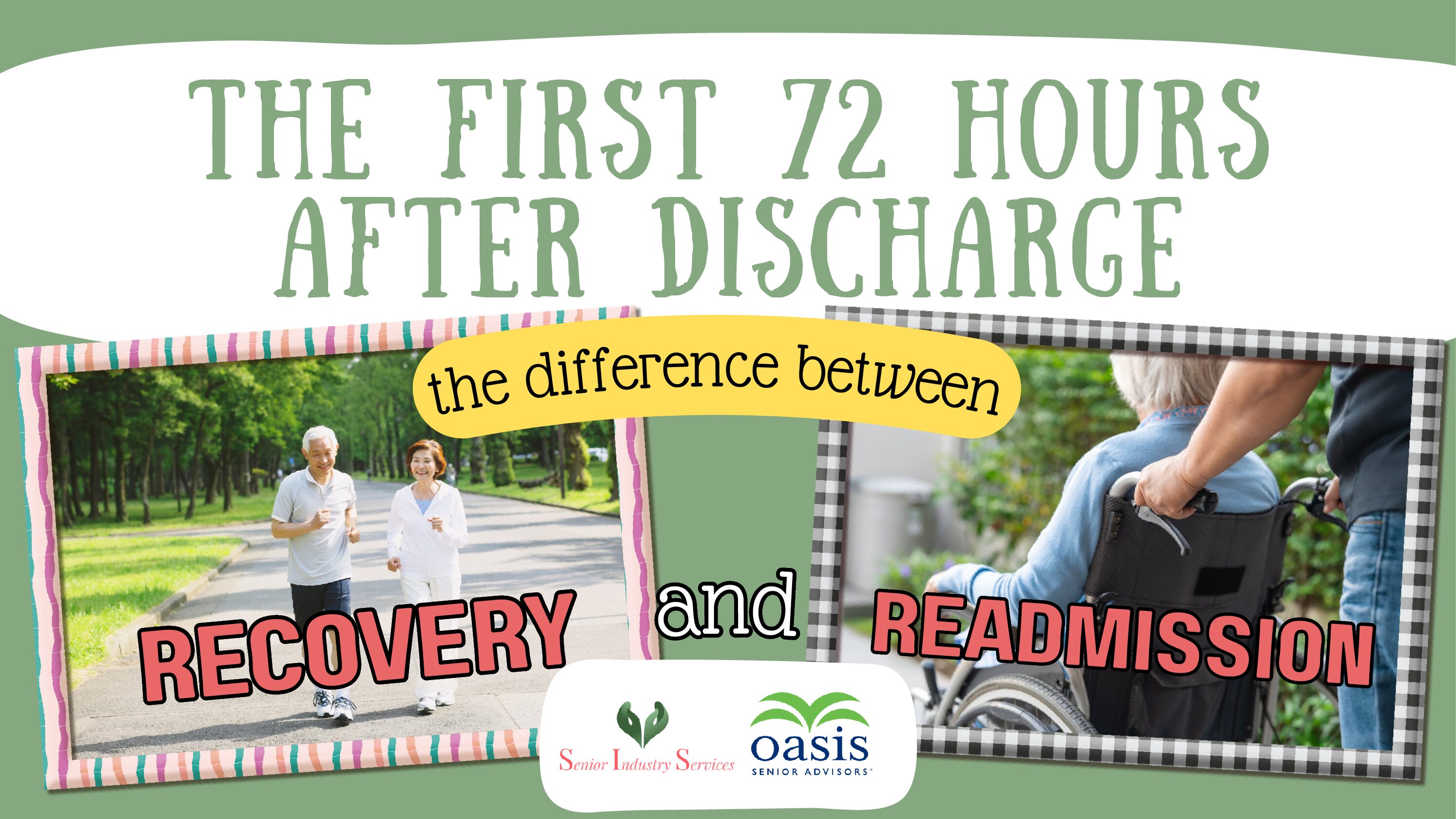
In a previous blog post, we highlighted exactly why the first 72 hours following a hospital discharge are so vital and what caregivers may not be told or warned about ahead of time. Today, we will further dive into this topic and explore the impact in the first three days and the two directions your loved one can go: recovery or readmission. Obviously, the goal is always to have your senior loved one continue to improve, heal, and recover; however, sometimes there are things out of our control, and they might still need extra care via readmission. But there are many things that can be done to help reduce the risk of needing a readmission. There are certain aspects and preventive measures that can be taken to reduce the risk of needing readmission, and many of those begin and end with being present and proactive in your loved one's care, specifically in the first 72 hours.
Ensuring they have proper help and care and that their environment is safe and they have all the tools needed in order to continue their recovery journey is vital. Taking those measures may simply look like checking that walkways are clear and well-lit, ensuring they can take their medications on time and as prescribed, and that they can safely and effectively move, transfer, and feed themselves.
Some seniors may need some extra help with some or all of these things, and that’s completely understandable following a hospitalization. After a hospital stay (regardless of the cause, be it an injury, illness, or surgery), you are often weaker, and it will take time to rebuild your strength. This is just one of the reasons the first 72 hours after discharge are often the most dangerous part of the recovery process. Readmissions don’t usually happen due to a major medical emergency following the discharge but rather a snowball effect of small things that can lead to a larger crisis. Some examples of events that can occur that may lead to readmission can be things as simple as missed or doubled medication (or taking prescribed medications incorrectly), not eating or drinking enough, or falling whilst trying to navigate around their home.
Having your loved one released from the hospital often comes with relief, but that relief should also be laced with caution, as the first 3 days out of the hospital are precarious.
At Senior Industry Services, we know just how important those first 3 days are, and we’ve seen various scenarios like this play out numerous times across Central Texas. We've also seen how the right support during those first 3 days can completely change the outcome.
Why the First 72 Hours Matter So Much
Hospitals discharge patients when they are medically stable, not necessarily when they are fully recovered. This can be confusing for families and patients alike, as they may feel like they aren’t ready to be away from around-the-clock care and monitoring by nurses, physicians, and therapists. However, the amount of time covered and approved by insurance and/or Medicare may differ and may not be as long as you’d expect, often leaving families scrambling for solutions and wondering what to do next.
So, while doctors and insurance providers may look at your loved one's case and determine that they are “ready to go home,” that doesn’t always mean they are back to normal or completely recovered. Most times, it means they are still on that journey, often still in pain, weak, and may still need assistance and monitoring. Losing the around-the-clock support can often leave families worried about how their loved one will fare alone and whether or not they need additional care from a caregiver (if a family member has not already taken that responsibility) or even time in a rehab facility. Suddenly becoming responsible for your senior loved ones' medication management, meal prep, assistance with mobility, and ADLs (activities of daily living) such as dressing, bathing, and using the restroom can be overwhelming…and that’s putting it lightly. Having to keep track of their health and symptoms and ensuring they are being safe and well-cared for is stressful and oftentimes feels burdensome to one person alone. There may be so much weight on your shoulders that you cannot, and should not, bear alone. Because of this, there’s a lot of room for error and things that can go wrong if you don’t have the right support.
Luckily, Senior Industry Services and Oasis Senior Advisors of Austin and Central Texas work together to help aid you and your loved one to ensure a smooth recovery and an easy transition from hospital to home.
Where Most Readmissions Begin
When families think about readmissions, they often imagine a major medical setback.
In reality, they can occur from small and often preventable things such as missed medications, confusion regarding discharge instructions, poor nutrition or hydration, falls, and worsening symptoms.
“The initial three days at home set the tone for recovery. Patients are adapting to a less controlled environment without 24-hour access to nurses and doctors. Medications may be new or adjusted, dietary restrictions may need strict attention, and mobility is often compromised. Without professional oversight, small issues like dehydration, skipped medications, or missed wound care can escalate quickly. For seniors or those with chronic conditions, the first 72 hours can feel overwhelming. Fatigue, disorientation, and discomfort make it harder to follow discharge instructions. Families often try to fill the gap, but the reality of hands-on care, assisting with mobility, preparing safe meals, and monitoring symptoms, can quickly exceed what relatives are prepared for.”
— Perlman & Gamburd, 2026
An Austin, Texas Story: What Could Have Gone Wrong and How We Helped
Recently, a family in the Austin/Central Texas area contacted us after their father was discharged following a hospitalization from an illness. On paper, everything looked fine and should go according to his recovery plan. However, there were still some concerns and questions the family had following his discharge. We helped the family to look closer at the situation to determine any possible risks that could have resulted in readmission and helped them to address them!
These problems weren’t anything major, and they weren’t factors that were blaring alarms; they were minor concerns that were grounded in validity that we helped the family to address to ensure the best possible recovery for their father.
1. Medication
This is the number one concern we see for a lot of families, and also the cause of a lot of hospital readmissions. Whether it’s missed doses or doubling of doses or not taking prescriptions as prescribed, medicines can cause problems for seniors at any time, not just after hospitalization.
For this family in Austin, their father returned home with multiple new prescriptions that he was unfamiliar with. On top of that, one of his already existing prescriptions was adjusted during his hospital stay, and one was discontinued. This was bound to create at least some confusion when he got home. His daughter said she understood the changes, but her father was mixing up the instructions and confusing them with previous medications he was taking. Without intervention and steps being taken to ensure he had the proper instructions and a medicine schedule, it would’ve been easy to miss or duplicate a dose.
We reviewed their father’s medications and helped create an organized schedule and ensured everyone was updated on the changes. This helped to eliminate confusion and reduce the risk of medication errors, which is one of the leading causes of preventable readmissions.
2. Hydration and Nutrition
Eating healthy and balanced meals regularly is important for all people, but especially when you’re still recovering. The same can be said for staying hydrated and drinking enough water. The family realized that their father did not have enough food in his fridge or cupboards to have meals to support his recovery, and they needed to go grocery shopping. With this helpful reminder from us to check the pantry and fridge for food and remove any expired goods, the family was able to fully stock their house with food, water, and other nutritional beverages for their father to have while he continued recovering. It’s important for seniors who have just been discharged from the hospital to eat well so they can regain their strength and energy!
We helped ensure meals were available and that hydration was being monitored for their father. Something as simple as regular meals and adequate fluids can significantly impact recovery and help prevent complications.
3. Mobility
Before hospitalization, a senior may be fairly independent; that was the case for this family and their father. However, after discharge, he was noticeably weaker and needed some assistance when first standing up. Things that were a breeze before were suddenly more difficult. This made his family take notice of his ability levels and current limitations, as well as hazards such as cluttered pathways and loose rugs. One fall could’ve landed their father back in the hospital, but luckily, they took preventative measures to ensure his safety and mobility while still recovering.
We helped identify fall risks throughout their father’s home and provided lists of things to check and ensure were safe, such as clear and well-lit pathways. We also recommended moving items used regularly to areas within easy reach and adjusting the home environment to match their father’s current ability levels.
Ensuring Adequate Support
Having adequate support as a family caregiver can be challenging. It can be an isolating experience to go through this journey with a senior loved one and feel all the weight and responsibility fall on your shoulders. Sometimes it can be confusing to determine who is doing what when it comes to the recovery of a family member, and others can assume someone else is checking in. That’s why communication between family members and caregivers is so important. Having to balance your personal life, work, and responsibilities with caring for a senior parent is challenging, which is why coordinating care schedules is so helpful for everyone involved. Ensuring you know who is checking in and when, who is handling appointments and monitoring symptoms, and who can be available if needed? Sometimes that may be multiple different people, friends, and family members, or it might be one. It’s important to remember, though, that you don’t have to bear this burden alone and that it’s okay to ask for help!
Recovery Versus Readmission:
The difference between recovery and readmission often comes down to what happens in those first 72 hours, which is why they are so important. A successful transition typically includes:
- Clear medication management
- A safe and prepared home environment
- Consistent supervision and support
- Early follow-up care
- Ongoing monitoring for changes in symptoms
When these elements are in place, your loved one's recovery process will be smoother and less stressful for all parties involved. Don’t be afraid to ask questions before leaving the hospital to know how to best manage these pivotal first 72 hours. According to a systematic review, some readmissions are likely preventable, upwards of 27 percent.
The first three days after discharge are a vulnerable transition period, and those three days will set the tone for the following days of recovery.
At Senior Industry Services, we believe discharge isn't the end of care; it's the beginning of the next phase of recovery!
Need Help Navigating a Hospital Discharge?
Whether you're a family caregiver, healthcare provider, discharge planner, or senior care professional, Senior Industry Services helps connect families with the resources, services, and support needed during the most critical transition in care.
Oasis Senior Advisors works alongside Senior Industry Services (SIS) to help seniors and families alike. It’s understandable to feel uncertain after a discharge and not know what to do next, that's where SIS and Oasis can help!
How Senior Industry Services and Oasis Senior Advisors of Austin & Central Texas Can Help During Those Critical First 72 Hours:
When questions arise about safety at home, care needs, rehabilitation options, assisted living, memory care, or additional support services, having an experienced guide can make all the difference.
That's where Senior Industry Services and Oasis Senior Advisors Austin & Central Texas can help. SIS can help provide you with a database of information and resources and a great starting place to work from! Explore our resources and tools designed to support caregivers, providers, and senior care organizations!
Oasis can help with their free, personalized senior living and care advisory services! They assist families in evaluating care options, navigating discharge decisions, coordinating transitions, and identifying the right level of support based on a senior's medical, functional, and financial needs. Their advisors regularly work with families, hospitals, case managers, and referral partners throughout Central Texas during some of the most time-sensitive transitions in the aging journey.
Whether a loved one can safely return home, needs additional in-home support, requires rehabilitation, or would benefit from assisted living or memory care, Oasis Senior Advisors helps families understand their options and avoid rushed decisions made under discharge pressure. Their team can assist with care planning, community selection, tours, and transition coordination, helping to create a smoother path from hospital discharge to recovery!
Written for Senior Industry Services by Lauren Hope Bartling
References:
Dhaliwal, J. S. (2024, June 7). Reducing hospital readmissions. StatPearls. National Library of Medicine. https://www.ncbi.nlm.nih.gov/books/NBK606114/
Digital Caregivers – resources for family caregivers. The Hospital-to-Home Transition: The First 72 Hours After Discharge. (n.d.). https://digitalcaregivers.com/resources/hospital-to-home-transition-first-72-hours-after-discharge
LeAnne Gendreau, Dr. R. R. (2026, May 21). Why the first 72 hours after hospital discharge are critical. https://www.kptv.com. https://www.kptv.com/2026/05/21/why-first-72-hours-after-hospital-discharge-are-critical/?utm_source=chatgpt.com
Perlman, M., & Gamburd, M. (2026, March 14). The first 72 hours at home after hospital discharge. CARE HOMECARE | 24 Hour In-Home Care Services | Los Angeles, CA. https://carehomecare.com/the-first-72-hours-at-home-after-hospital-discharge/
The first 72 hours at home. Executive Home Care. (2026, February 17). https://executivehomecare.com/chester-county/about-us/resources/the-first-72-hours-after-discharge/#:~:text=The%20Part%20Nobody%20Talks%20About,It’s%20not.
Why the first 72 hours after discharge from hospital matter. Kind Senior Care. (2026, May 21). https://kindseniorcare.com/2025/08/29/the-first-72-hours-after-discharge-from-the-hospital-why-post-hospital-care-matters/