
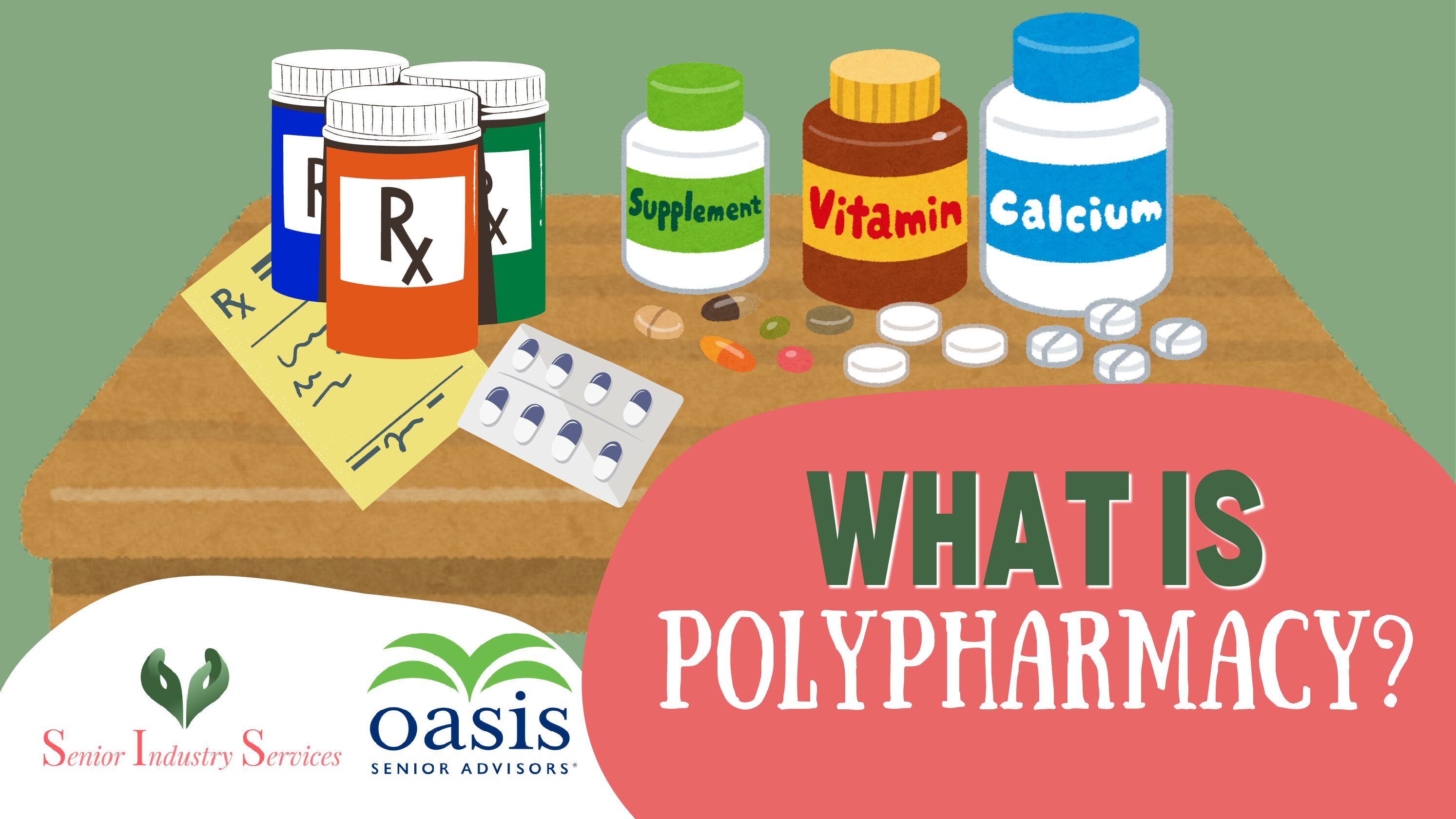
As we age, it's common to develop more than one chronic health condition. And managing health conditions oftentimes involves the need for one or more prescriptions or medications. Typically, the more diagnoses mean more medications needed, especially in older adults who are more likely to experience health issues. We have discussed the topics of medication management and polypharmacy in other blog posts, but today we’ll be providing an overview of information on polypharmacy.
When dealing with numerous health conditions as a senior, whether it be high blood pressure, diabetes, or arthritis, you may be taking more than one medication to help manage symptoms. As the number of medications grows, it can create new health concerns known as polypharmacy. Now, what exactly is polypharmacy, you may be wondering? We’re here to explain it, the risks, and how to avoid them.
We first want to state that medications should be taken as prescribed by Physicans and health conditions and symptoms should be monitored regularly to reduce the risk of side effects, dangerous drug interactions, falls, duplicate doses, and hospitalizations. Having a better understanding of polypharmacy can help seniors, families, and caregivers make informed decisions regarding medical safety.
What Is Polypharmacy?
An article on Polypharmacy by the National Library of Medicine defines Polypharmacy as the regular use of 5 or more medications at the same time, and it is common in older adults and at-risk younger individuals. As aging individuals often contend with multiple chronic health conditions, the use of 5 or more medications becomes common, posing risks of adverse outcomes such as falls, frailty, and disability. The World Health Organization suggests that while the definition is numerical, the emphasis should be on evidence-based practice and the goal of reducing inappropriate polypharmacy. The article also states that the United States has one of the world's highest medication rates per capita.
These medications are not just prescription (although multiple prescription medications taken will increase the likelihood of unwanted interactions without a doctor's or pharmacist's clearance). These medications could be prescription, over-the-counter, vitamins, supplements, or herbal products.
We also want to make it clear that polypharmacy isn’t always bad or inappropriate. In fact, according to a WHO report, polypharmacy can be categorized as appropriate or inappropriate:
- Appropriate polypharmacy occurs when all medications are prescribed with clear therapeutic objectives that are met or likely to be met, with optimized therapy to minimize adverse drug reactions (ADRs), and the patient is compliant.
- Inappropriate polypharmacy involves prescriptions that are unnecessary or potentially harmful due to lack of indication, failure to meet therapeutic objectives, high risk of ADRs, or patient non-compliance.
Issues with polypharmacy occur when you fail to discuss all of the medications and supplements you’re actively taking to your physician (or pharmacist). Some people may need 5 or more medications to manage their health conditions or function from day to day, and that’s fine! Managing chronic conditions often involves having multiple medications or supplements in one's arsenal. However, concerns arise when medications are unnecessary, duplicated, have negative interactions with others, or when the risk outweighs the benefit.
Medications are intrinsically personal, and what works for one person may not work for another. That’s why it’s so important to have regular medication reviews with your doctor to go over side effects, efficacy, and evaluate the continued use of medications. It’s also important to have an accurate and updated list of medications, vitamins, and supplements when going to the doctor so they’re better able to avoid any negative interactions.
Why Are Older Adults More at Risk?
The National Library of Medicine explains why older adults are more at risk and more likely to be affected by Polypharmacy, explaining that even though people 65 years and older comprise about 14% of the total population, they account for over one-third of outpatient spending on prescription medications in the United States. Based on a recent population bulletin, the number of people aged 65 and older is projected to at least double from 46 million today to more than 98 million by 2060.
The responsibility for avoiding mistakes with polypharmacy largely lies with physicians and pharmacists, but it’s also vital to be an advocate for your loved one's health and help ensure they avoid any risks associated with taking multiple medications.
Several factors make seniors more vulnerable to medication-related problems:
- Multiple chronic health conditions, which increase the chances of being prescribed multiple medications
- Seeing several healthcare providers and/or pharmacies
- Having prescriptions from different specialists or doctors
- Age-related changes in how the body processes medications (Aging does not significantly affect the extent of drug absorption, but the absorption rate may be slower.)
- Changes in kidney and liver function
- Memory problems that can make medication schedules difficult to follow
Common Concerns of Polypharmacy
Taking multiple medications can increase the likelihood of:
Drug Interactions
Some medications can change how others work, making them either less effective or more dangerous. Multiple medications increase the potential for drug-drug interactions and the prescription of potentially inappropriate medications. A drug-drug interaction refers to one medication affecting another. Drug-disease interactions occur when taking a medication for one health problem makes another health problem worse. Drug interactions can cause unwanted and avoidable side effects such as fatigue, dizziness, confusion, and more.
Increased Fall Risk
Certain medications can affect balance, blood pressure, or alertness, increasing the risk of falls and fractures. Some studies have found that polypharmacy has been shown to be an independent risk factor for hip fractures in older adults.
Use of OTC Medications
Over-the-counter medications, also commonly referred to as OTC, are common for people of any age, but especially elderly folks who have more chronic conditions to manage. The use of OTC medication has increased over the past decade, with studies showing a large prevalence of those numbers being with the older adult population. The challenging part of using OTC medications is that because they are readily available, some seniors may forget to bring them up in appointments. Discussing all of the vitamins, supplements, and OTC medications you take with your doctor is important so they can have a full look at your medication routine and ensure there are no interactions.
Medication Errors
Complex medication schedules increase the chance of missed doses, accidental double doses, or taking medications incorrectly. Research found that polypharmacy can lead to problems with medication adherence in older adults, especially if associated with visual or cognitive decline, associated with aging, and resulting in bad outcomes like treatment failure or hospitalizations.
Warning Signs That Medications May Need Review
Speak with your healthcare provider if you or a loved one experiences:
- Frequent dizziness or falls
- Increasing fatigue
- Confusion or memory changes
- New digestive problems
- Difficulty keeping track of medications
- Multiple doctors prescribing medications without coordination
- Symptoms that began after starting a new medication
Sometimes what appears to be a new medical condition is actually a side effect of an existing medication.
The Importance of Medication Reviews
One of the best ways to reduce the risks of polypharmacy is through a regular medication review with a physician or pharmacist.
During a medication review, healthcare professionals evaluate:
- Whether each medication is still necessary
- Potential drug interactions
- Duplicate drugs
- Appropriate dosages
- Opportunities to simplify medication schedules
- Whether any medications can be safely reduced or discontinued
This process, known as deprescribing, is done carefully under medical supervision. Patients should never stop taking prescription medications on their own. An article on deprescribing amongst geriatric patients states that addressing polypharmacy requires a multifaceted approach, including raising clinician awareness, promoting rational prescribing, and implementing patient-centred interventions. Emphasising appropriate polypharmacy and deprescribing can significantly reduce adverse outcomes and improve overall quality of care in geriatric populations.
Tips for Families of Seniors and Caregivers
To help manage medications safely:
- Keep an updated list of every medication, vitamin, and supplement taken by the senior
- Bring the list to every medical appointment (can be printed/handwritten or on a cellphone)
- Use one pharmacy whenever possible so drug interactions can be easily monitored
- Ask questions about why each medication is prescribed and whether it's still needed
- Report any new symptoms after starting a medication
- Schedule a complete medication review at least once a year or whenever a major health change occurs
- Don’t be afraid to ask questions to your healthcare provider regarding medications (if they’re still needed, any symptoms they could cause, safe alternatives, if any could be reduced or stopped)
Managing medications is a shared responsibility among patients, family members of seniors, caregivers, physicians, pharmacists, and other healthcare professionals. Open communication amongst all parties involved helps to ensure medications can continue to provide more benefit than harm.
For seniors, regular medication reviews can improve quality of life, reduce preventable side effects, and lower the risk of falls and hospitalizations. The goal isn't necessarily to take fewer medications; it's to take the right medications, at the right doses, for the right reasons.
If you or a loved one takes multiple medications, talk with your healthcare provider or pharmacist about whether it's time for a comprehensive medication review. Small changes today can help prevent larger health problems tomorrow!
Written for Senior Industry Services by Lauren Hope Bartling
References:
Nokwanda Nhlanzeko Ngcobo, Polypharmacy and deprescribing among geriatric patients, Aging and Health Research, Volume 5, Issue 3, 2025, 100256, ISSN 2667-0321, https://doi.org/10.1016/j.ahr.2025.100256.
Nwaubani, C. (n.d.). Too much of a good thing? unpacking the rise of Polypharmacy in seniors - pharmd live. https://www.pharmdlive.com/blog/too-much-of-a-good-thing-unpacking-the-rise-of-polypharmacy-in-seniors/
Pazan, F., & Wehling, M. (2021). Polypharmacy in older adults: a narrative review of definitions, epidemiology and consequences. European geriatric medicine, 12(3), 443–452. https://doi.org/10.1007/s41999-021-00479-3
Polypharmacy in adults 60 and older | Johns Hopkins Medicine. (n.d.). https://www.hopkinsmedicine.org/health/wellness-and-prevention/polypharmacy-in-adults-60-and-older
Timothy Nguyen, Elaine Wong, Francesco Ciummo,
Polypharmacy in Older Adults: Practical Applications Alongside a Patient Case,
The Journal for Nurse Practitioners, Volume 16, Issue 3, 2020, Pages 205-209, ISSN 1555-4155, https://doi.org/10.1016/j.nurpra.2019.11.017. (https://www.sciencedirect.com/science/article/pii/S1555415519310517)
Varghese D, Patel P. Polypharmacy. [Updated 2024 Feb 12]. In: StatPearls [Internet]. Treasure Island (FL): StatPearls Publishing; 2026 Jan-. Available from: https://www.ncbi.nlm.nih.gov/books/NBK532953/