
Reviewed by John Brown, CSA®
Senior Industry Services | Central Texas
Weight loss after 65 can be different than it was at 30 or 40. Changes in muscle mass, activity levels, medications, appetite, and medical conditions can all affect weight as we age.
For seniors, the goal isn't always simply losing pounds. Protecting strength, mobility, nutrition, energy, and independence can be just as important as the number on the scale.
This Senior Industry Services (SIS) guide explains what changes with age, what seniors and families should watch for, and how to approach healthy aging safely.
Table of Contents
- Why Weight Loss Changes After 65
- Metabolism, Muscle Mass, and Sarcopenia
- Medication Side Effects and Weight Change
- Nutrition: Protein, Hydration, and Nutrient-Dense Choices
- Budget-Friendly Healthy Eating
- Safe Exercise and Adaptive Equipment
- Managing Loss of Appetite
- Unintentional Weight Loss: When to Call a Doctor
- Emotional and Psychological Barriers
- The Independence Reframe
- Building Sustainable Habits
- Frequently Asked Questions
Why Weight Loss Changes After 65
Aging changes the weight-management equation.
Muscle mass can decline, physical activity may decrease, and medical conditions or medications can affect appetite and weight. Approaches that worked earlier in life may not be appropriate later.
For many seniors, the focus should shift away from losing pounds quickly and toward maintaining strength, nutrition, mobility, and overall health.
Watch Out
Aggressive dieting may be concerning when a senior is already experiencing muscle loss, frailty, poor appetite, or another health condition.
Before beginning a significant weight-loss or exercise program, talk with a physician or other qualified healthcare professional.
Metabolism, Muscle Mass, and Sarcopenia
Sarcopenia is the age-related loss of muscle mass and strength.
Maintaining muscle matters because strength supports everyday activities such as getting out of a chair, climbing stairs, carrying groceries, walking, and remaining independent.
The answer isn't necessarily simply eating less. Adequate nutrition—including sufficient protein—combined with appropriate physical activity can help support muscle and healthy aging.
Source: National Institute on Aging — Healthy Eating as You Age
Medication Side Effects and Weight Change
Medications can sometimes contribute to weight or appetite changes.
Depending on the medication and individual, possible effects can include increased or reduced appetite, nausea, changes in taste, fluid retention, weight gain, or weight loss.
If a noticeable change begins after starting or changing a medication, talk with the prescribing healthcare professional or pharmacist.
Never stop or change a prescription medication without medical guidance.
Nutrition: Protein, Hydration, and Nutrient-Dense Choices
Seniors may need fewer calories than when they were younger while still needing adequate protein, vitamins, minerals, fiber, and fluids.
Helpful choices can include:
- Eggs, fish, poultry, beans, lentils, nuts, seeds, and appropriate dairy products
- Fruits and vegetables
- Whole grains
- Nutrient-dense foods
- Fluids throughout the day
Protein helps support muscle, while hydration remains an important part of healthy aging. Seniors who have been instructed to restrict fluids should follow their healthcare provider's recommendations.
Source: National Institute on Aging — Healthy Meal Planning: Tips for Older Adults
Budget-Friendly Healthy Eating
Healthy eating doesn't require expensive specialty foods.
Budget-friendly choices can include canned or dried beans, frozen vegetables, eggs, oats, lentils, canned fish, and nut butters.
Cooking larger portions and freezing individual meals can also make nutritious meals easier and more affordable.
Central Texas Resource
Seniors and caregivers who need additional support may have resources available through their local Area Agency on Aging (AAA).
Across the SIS Central Texas service area, different AAAs serve different counties, including the Capital Area, Central Texas, Heart of Texas, Brazos Valley, and Alamo regions. Services vary by location and eligibility and can include nutrition programs and connections to other aging-related resources.
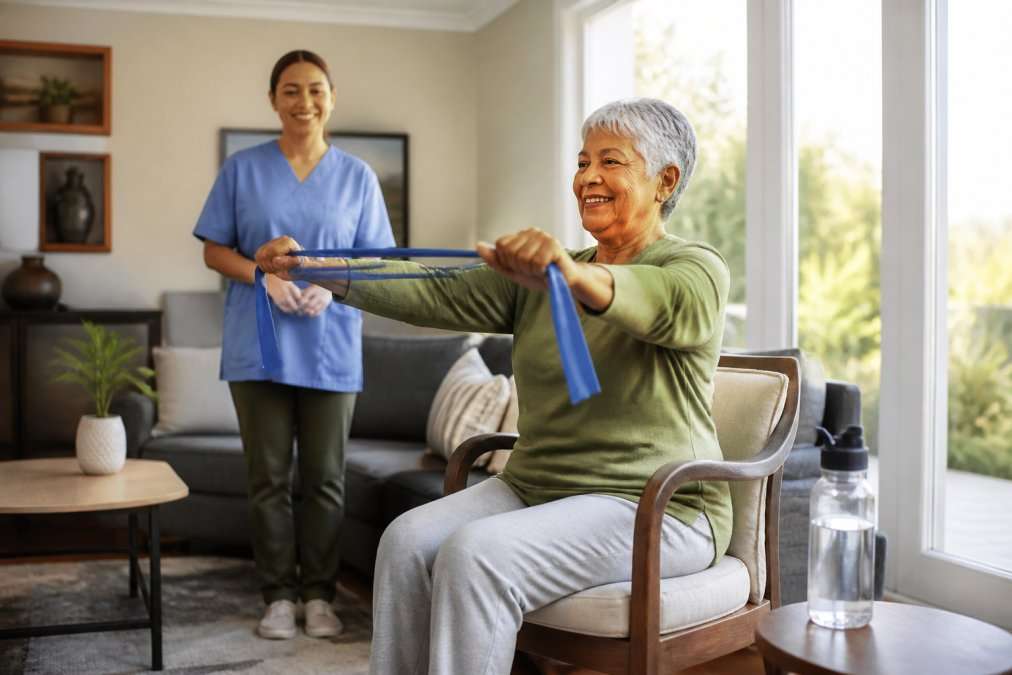
Safe Exercise and Adaptive Equipment
Physical activity can support cardiovascular health, strength, balance, mobility, and independence.
Depending on health and ability, activities might include:
- Walking
- Water exercise
- Seated exercises
- Resistance-band or light strength exercises
- Balance exercises
- Stretching and flexibility activities
Adaptive equipment such as resistance bands, seated pedal exercisers, sturdy chairs, or grip aids may make movement more accessible.
A senior with chronic medical conditions, mobility limitations, fall concerns, or a long period of inactivity should talk with a healthcare professional before starting a new exercise program.
Source: National Institute on Aging — Exercise and Physical Activity
Managing Loss of Appetite
Not every senior needs to lose weight.
For some seniors, getting enough nutrition is a greater concern than losing weight.
Medications, medical conditions, dental problems, difficulty swallowing, changes in taste or smell, depression, or social isolation may affect appetite.
Smaller meals may be easier for some seniors to manage, and making meals social can help make eating more enjoyable.
Persistent appetite changes or unexplained weight loss should be discussed with a healthcare professional.
How Seniors Can Lose Weight And Keep It Off
Eric Daw
Embed YouTube video:
https://youtu.be/h-tIOm4g9WM?si=0WVkcPRwd_FI8HbQ
Unintentional Weight Loss: When to Call a Doctor
Unintentional weight loss shouldn't automatically be dismissed as part of aging.
Talk with a healthcare professional if you notice:
- Significant weight loss without trying
- Clothes becoming noticeably loose
- Persistent loss of appetite
- Trouble chewing or swallowing
- Increasing weakness or fatigue
- A meaningful unexplained change in eating habits
Possible causes range from medication effects and dental problems to nutritional, emotional, or medical concerns.
Emotional and Psychological Barriers
Healthy eating and activity aren't purely physical issues.
Grief, loneliness, depression, retirement, reduced mobility, and changes in routine can affect appetite, motivation, and physical activity.
Fear of falling or injury may also discourage seniors from exercising.
Helpful strategies can include:
- Starting with seated or supported movement
- Finding senior-friendly activities
- Walking or exercising with another person
- Eating meals with family or friends
- Setting small, realistic goals
- Focusing on function instead of appearance
Understanding why someone's habits have changed may be more helpful than simply telling them to eat less or exercise more.
The Independence Reframe
For many seniors, independence may be a more meaningful goal than weight loss itself.
Instead of focusing only on pounds, think about what maintaining health and strength can help someone continue doing:
- Living as independently as possible
- Getting up from a chair safely
- Walking through the grocery store
- Driving or traveling
- Gardening
- Attending family activities
- Playing with grandchildren
- Meeting friends and participating in the community
That changes the conversation from:
"I need to lose weight."
to:
"I want to stay strong enough to keep doing the things that matter to me."
For seniors and families throughout Austin, Round Rock, Georgetown, Cedar Park, Leander, Lakeway, Bastrop, San Marcos, New Braunfels, Temple, Killeen, Waco, Bryan/College Station, and surrounding Central Texas communities, maintaining independence and quality of life is often the bigger goal.
Building Sustainable Habits for Healthy Aging
Healthy aging comes from small habits repeated over time—not quick fixes.
Focus on:
- One manageable goal at a time
- Regular meals and appropriate physical activity
- Nutrient-dense foods
- Appropriate hydration
- Social connection
- Regular medication and health reviews
- Addressing unexpected changes in appetite or weight
The goal isn't perfection. It's protecting strength, mobility, function, independence, and quality of life.
Frequently Asked Questions
How can a 70-year-old woman lose weight safely?
There isn't one plan that's appropriate for every 70-year-old. Medical conditions, medications, nutrition, muscle mass, and mobility all matter. When weight loss is appropriate, a physician or registered dietitian can help develop an individualized approach.
Is it normal for seniors to lose weight unintentionally?
Unintentional weight loss should not automatically be considered a normal part of aging. Persistent or significant unexplained weight loss should be discussed with a healthcare professional.
What are the safest exercises for seniors?
Walking, water exercise, seated movement, resistance exercises, balance activities, and flexibility exercises may be appropriate depending on health and mobility. Seniors with medical conditions or fall concerns should discuss a new exercise program with a healthcare professional.
How do nutritional needs change with age?
Calorie needs may decrease, but good nutrition remains important. Protein, fiber, vitamins, minerals, and hydration all play roles in healthy aging.
Healthy Aging Is About More Than the Scale
Weight changes after 65 can involve muscle loss, medications, nutrition, mobility, medical conditions, emotional health, and social connection.
For seniors and families, the goal shouldn't automatically be losing pounds. Maintaining strength, mobility, nutrition, independence, and quality of life may matter far more.
Senior Industry Services (SIS) connects seniors, families, caregivers, and healthcare professionals with educational resources, local senior-service providers, Hospital-to-Home information, and Senior-AI resources throughout Austin and Central Texas.
Whether you're navigating a change in health, caregiving needs, senior living options, or simply trying to understand what resources are available locally, SIS can help you find the next step.
This article is for educational purposes and is not a substitute for individualized medical, nutritional, or exercise advice.
Reviewed by John Brown, CSA®
Senior Industry Services | Central Texas
Powered by Oasis Senior Advisors Austin & Central Texas